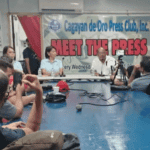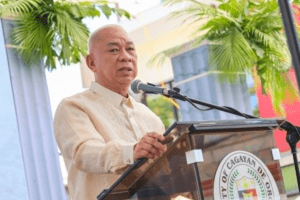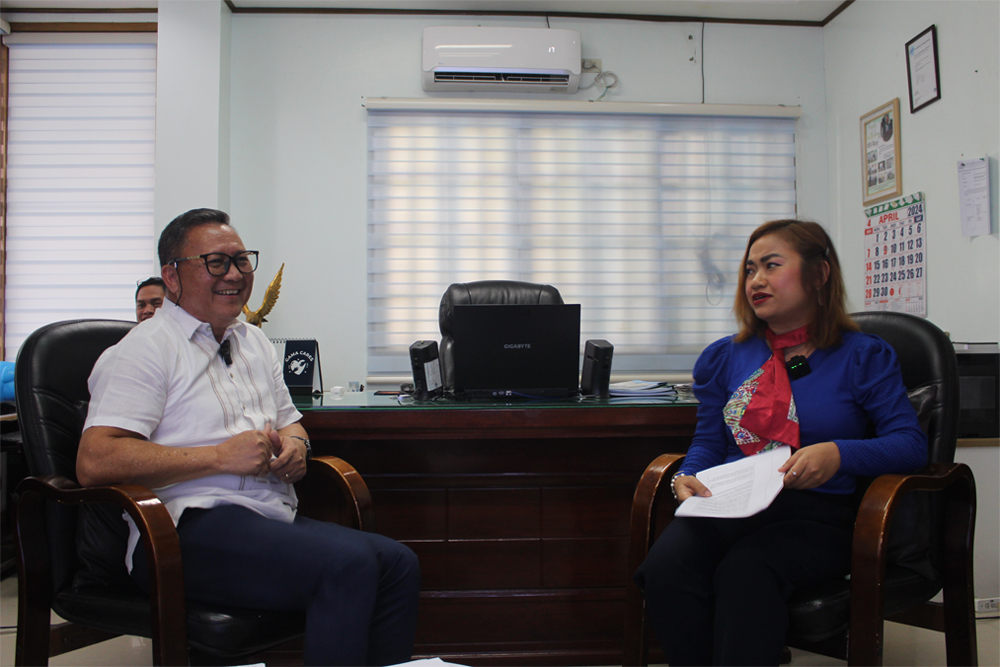
Reynaldo S. Digamo (left), regional director of the Environmental Management Bureau-10, discussed the magnitude and scale of the problem being brought about by plastic pollution during Talakayan sa PIA on the National Earth Month episode. (MBA/PIA-10)
MindanaoToday.com | Plastic pollution threatens Northern Mindanao, says EMB-10
By: Jasper Marie O. Rucat
Highlighting the theme “Planet vs. Plastic,” Digamo emphasized that the discussion extends beyond the country; it encompasses the entire planet. This highlights the severity of plastic pollution and marine litter on a global scale.
In 2022, the government passed Republic Act 11898, also known as the Extended Producer Responsibility on Plastic Packaging Waste Act, as a landmark piece of legislation to combat plastic pollution.
This law designates all plastic manufacturing companies with capitalizations of P100 million and above as obliged enterprises, requiring them to register under the law and assume responsibility for the plastic they produce, from manufacturing to the end of its life.
“Ibig sabihin, hindi matapos ‘yung responsibilidad mo, from the manufacturer to the transport, to the user or distributor, tapos end user, pagkatapos niyan end user itatapon na niya, so, responsibility ngayon niya na i-recover ng producer ‘yung plastic na yun,” said Digamo.
Digamo stated that the goal is to address marine litter plastic pollution, reduce it, and then, side by side with all of these recovery measures, recycle and repurpose.
In the previous report, the Philippines was number three, said the director, but now the country is number one in marine plastic pollution globally, with 356,371 million metric tons of plastic waste in the ocean, followed by India (126,000) and China (70,707).
Plastic, despite its long life, will degrade in a hundred years if left out in the environment.
“Kun ma-degrade ba siya ngadto sa mga katubigan maka-create naman siya og mga microplastic di ba (If it degrades into the waters, it can create microplastics, right)? We have also heard of microplastics. And then, microplastics are also toxic and detrimental to our aquatic life,” said the director.
He added that plastic resembles a jellyfish, which is why turtles can eat it. It doesn’t dissolve, so the turtle dies. Marine animals are suffocated.
Returning to the old ways
“We are trying to advocate; go back to the old ways,” he said.
Digamo added that when citizens are ill, it poses a significant challenge for the government. A population in poor health becomes a burden rather than an asset, hindering productivity and human investment. Consequently, an unhealthy population diminishes overall productivity and contributes to societal challenges.
Earth Month focuses more on stewardship because we are just stewards in this world. “If we can do more, we should not be content with what we have done. There are still a lot of things to be done. We have to go beyond, ‘yang mga sinasabi nating (what we say on) beyond compliance,” Digamo said. (JMOR/PIA-10)’