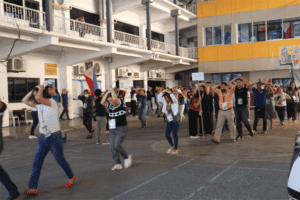
DISASTER READINESS. Municipal Disaster Risk Reduction and Management officers from across Lanao del Sur participate in the Training on Science and Technology in the Philippine Disaster Risk Reduction and Management System in Marawi City on June 2. The activity equips local disaster management personnel with skills in early warning and hazard monitoring systems to strengthen community preparedness and resilience. (Photo courtesy of Provincial Information Office)
TheMonitorMindanaoToday.com | Lanao Sur DRRM officers train on early warning, monitoring systems
By: Apipa Bagumbaran
MARAWI CITY — Municipal Disaster Risk Reduction and Management (DRRM) officers from across Lanao del Sur underwent training on early warning and hazard monitoring systems to strengthen local disaster preparedness and resilience.

The Training on Science and Technology in the Philippine DRRM System included lectures on early warning systems (EWS) and their operation and maintenance for local government disaster preparedness, as well as hands-on sessions on the PhilSensors and tsunami EWS platforms and use of the Disaster Resilience through Enhanced and Adaptive Monitoring Solutions (DREAMS) Program.
The activity was conducted by the Ministry of Science and Technology-Bangsamoro Autonomous Region in Muslim Mindanao (MOST-BARMM) through the Provincial Science and Technology Center-Lanao del Sur on June 2 in Marawi City.
MOST Minister Baileng S. Mantawil said the initiative seeks to strengthen the capacity of communities and institutions to address increasing disaster risks.
She said climate change, extreme weather events, flooding, landslides, earthquakes, and other hazards underscore the need to make preparedness a way of life rather than an option.
“The good news is that we are no longer facing these challenges with limited tools. Today, science and technology provide us with powerful instruments for anticipating risks, issuing timely warnings, and making informed decisions. Early warning systems, hazard monitoring technologies, geospatial information systems, and digital platforms are transforming the way communities prepare for and respond to disasters,” Mantawil said.
According to her, the training is not only about learning new technologies but also about empowering participants with knowledge that can save lives.
“As we often say, the best disaster response is effective disaster preparedness. And effective preparedness begins with informed and capable people,” she added.

Provincial Science and Technology Center Director Alinader A. Sarangani said the training aims to reduce disaster-related risks and strengthen community resilience against natural and human-induced hazards.
“The training on science and technology in the Philippine DRR system aims to reduce the risks associated with disasters and make communities resilient against both natural and human-induced calamities through the principles of prevention and mitigation, for which DOST or MOST is the mandated and lead agency,” Sarangani said.
Provincial DRRM Officer Shaminoden M. Sambitory welcomed the initiative and cited the value of science and technology in disaster management.
“The introduction of Project DREAMS marks an important advancement in helping local government units access reliable weather forecasts and real-time information essential for informed decision-making and effective emergency response,” Sambitory said.
He said equipping local DRRM officers with the knowledge and skills to operate early warning devices would further enhance community safety and resilience.
“As disaster risks continue to evolve due to climate change and emerging hazards, integrating science, technology, and innovation into disaster risk reduction and management remains vital,” Sambitory added. (APB/PIA-10/Lanao del Sur)
###