TheMonitorMindanaoToday.com | Water pipe-laying works rushed as El Nińo looms
By: Uriel Quilinguing
CAGAYAN DE ORO CITY – About P400-million water infrastructure projects are either ongoing or have already been completed in seven suburban villages as the Cagayan de Oro Water District (COWD) recalibrates its production, storage, and distribution systems due to impending surface and ground water supply reductions due to El Nińo.
Although the official statement was posted on Friday, Oct. 23, the COWD’s pipe-laying projects of this city started in June, following an El Nińo alert the Philippine Atmospheric Geophysical and Astronomical Services Administration (Pagasa) issued on April 26 this year.
Pagasa, in its advisories, said the lack or absence of rainfall have already been felt and could even get worse in the coming months.
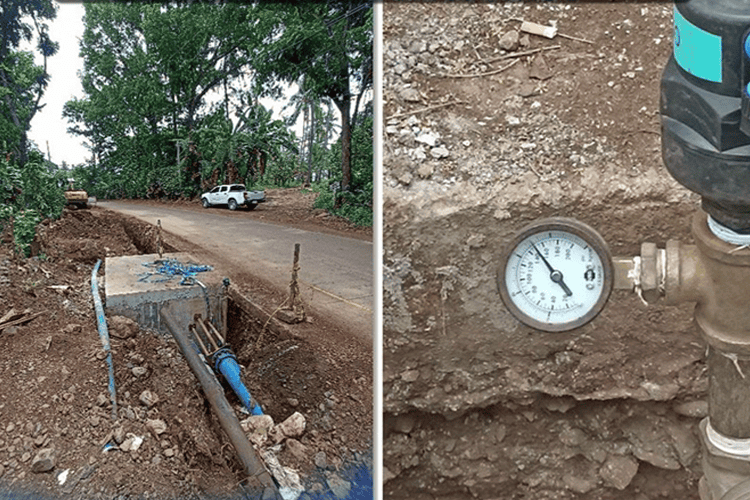
Water infrastructure projects in the western side of the city include the installation of 300-mm diameter reinforcement pipes in along Macapagal Road toward Pagatpat-Canitoan Road and across the Iponan Bridge, directly benefitting residents and business firms in Canitoan, Iponan, and Pagatpat villages and nearby areas.
Both projects are funded out of the P140,976,898.39 water infrastructure component from 2025 General Appropriations Act (GAA) and through the Department of Public Works and Highways. Specifically allotted for the first congressional district of the city, pipe-laying works which started on June 24, this year, are expected to be completed and turned over to the COWD within 253 calendar days.
Total population of Barangays Canitoan, Iponan and Pagatpat grew by about 23 percent in the past 10 years, to over 77 thousand from just 62,000 in 2015, following the Tropical Storm Sendong in 2011. Thousands had relocated to these villages since then.
Another P250 million from the second congressional district, also from the 2025 GAA, was also allotted for projects that could expand water access and increase storage capacity of village residents of Balubal, Cugman, Puerto, and Tablon, all situated in the western side of the city—also with about 70 thousand residents.
Balubal’s population almost doubled in the last 10 years from just over four thousand over a decade ago to 7,479 residents in the 2024 census, during which period low-cost housing projects for relocatees and internally displaced families have been established.
Specifically, the P250-million allocation for water infrastructures included the construction of water storage tanks, pump houses, mother-meter chambers, and installation of main distribution pipes, most of which have already completed and fully operational, according to COWD online posts.
###