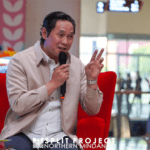
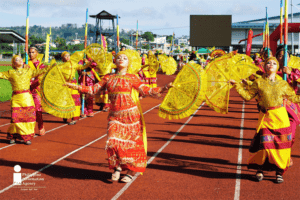
NOMCAARRD, with operational funding support from DOST PCAARRD and member institutions, comprises higher education institutions, research institutes, national government agencies, and other key stakeholders. (Supplied photo)
MindanaoToday.com | NOMCAARRD crafts market-driven R&D agenda with DOST support
CAGAYAN DE ORO CITY – The Northern Mindanao Consortium for Agriculture, Aquatic, and Natural Resources Research and Development (NOMCAARRD), in partnership with the Department of Science and Technology (DOST), updated the regional R&D agenda for the Agriculture, Aquatic, and Natural Resources (AANR) sector through a Regional R&D Agenda Updating Workshop held on July 11-12, 2024.
The updated R&D agenda is a collaborative effort that seeks to leverage and integrate multidisciplinary research and innovation capabilities. The AANR R&D Agenda aims to address industry needs and opportunities effectively.
NOMCAARRD is an organization composed of 22 members coming from National Government Agencies (NGAs), Higher Education Institutions (HEIs), and private agencies in Northern Mindanao, with Dr. Maria Estela B. Detalla as its director.
The consortium aims to identify regional research and development priorities and plan, monitor, and evaluate related activities in agriculture, fisheries, forestry, environment, and natural resources.
Dr. Napoleon K. Juanillo Jr., DOST Assistant Secretary for Technology Transfer, Communications, and Commercialization, led the two-day workshop at De Luxe Hotel in Cagayan de Oro City.
“It is time for our research trajectory to advance and consider global developments. We are moving beyond old ways,” remarked Juanillo.
“Our R&D agenda should be market-driven, fostering an environment that supports innovation, enhances regional S&T connectivity, and addresses the region’s most pressing issues,” he added.
NOMCAARRD, with operational funding support from DOST PCAARRD and member institutions, comprises higher education institutions, research institutes, national government agencies, and other key stakeholders.
The consortium has established a strong reputation for spearheading regional agricultural research and extension initiatives.
The region has identified critical research priorities across several sectors: crops, livestock, aquatic, forestry, and natural resources.
Key crop focus areas include bamboo, coffee, and cacao, while livestock research will concentrate on alternative feed formulation. Aquatic R&D will address sea cucumber, shrimp, and crab studies. Forestry efforts will emphasize GIS mapping and carbon credit tracking.
The R&D agenda for natural resources will also prioritize water management systems and sanitation initiatives.
“Recognizing the catalytic potential of R&D and innovation, this agenda must be responsive to industry needs and opportunities, thereby fostering regional growth and sustainability,” DOST-10 Assistant Regional Director Virgilio Fuertes said in his opening message. “It is now the direction and marching order of the new DOST management that R&D must be a collaboration of the industry, academe, and the government, DOST in particular, to ensure the results therein will be immediately utilized.”
To date, consortium members are as follow: CMU, BukSU, LDCU, PCC at CMU, MSU-IIT, MSU at Naawan, MSU-LNAC, XU, USTP – CDO, USTP – Claveria, CPSC, DA-RFU 10, NMSCST, ERDB-FWRDEC, NBSC, ATI-RTC 10, DOST 10, BFAR 10, NEDA 10, DA-BAR, NIA 10, and PCAARRD. (Rubie Mae D. Fernandez | DOST-10)
###