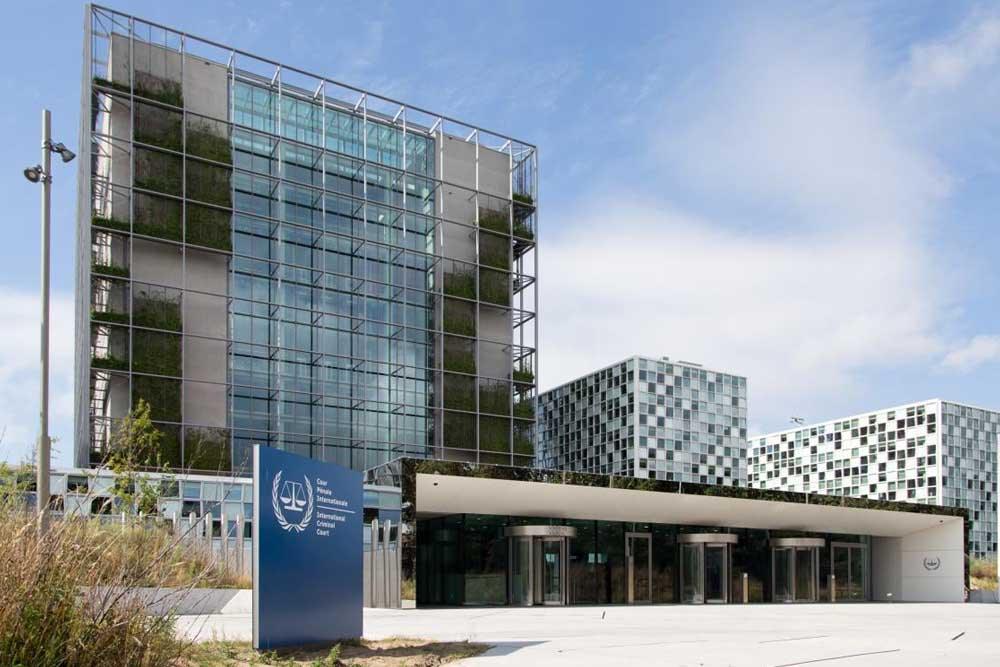
International Criminal Court (ICC) headquarters at The Hague, Netherlands (photo from official ICC Facebook)
MindanaoToday.com | Duterte’s arrest ignites mixed views, reactions
By: Uriel Quilinguing
CAGAYAN DE ORO CITY, Philippines – Thousands of Filipinos expressed contrasting views when ex-president Rodrigo R. Duterte was arrested upon arrival from Hong Kong at the Manila International Airport about 11 pm on Tuesday, March 11, this year.
On Wednesday night, March 12, after roughly 24 hours of air travel, the International Criminal Court in The Hague, Netherlands, issued a statement to confirm the former president of the Philippines, who was accused of a crime against humanity, was surrendered to its custody.
Aside from Davao City, the hometown of the former president, Duterte followers hastily staged mass actions in key cities of Mindanao, questioning the legality of the arrest and inaction of the Philippine government.
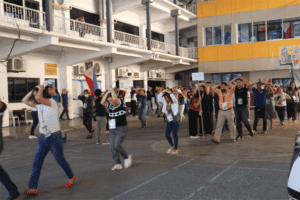
In Cagayan de Oro, a “prayer rally” was held at the Gaston Park just meters away from City Hall and was participated in by about a thousand, according to Colonel Salvador Radam, the city police director.
Major Joann Navarro, spokesperson of the Police Regional Office 10 in Northern Mindanao, said in radio interviews that they are on heightened alert following Duterte’s arrest and they are directed to secure all mass actions.
Similar sympathy gatherings were held in Valencia City of Bukidnon, Iligan City of Lanao del Norte, Pagadian City of Zamboanga del Sur, Ipil of Zamboanga Sibugay, Tagum of Davao del Norte, Cotabato City of Maguindanao del Norte, and Kidapawan City of Cotabato.
Duterte was arrested “in accordance with a warrant issued by Pre-Trial Chamber I that was served by a team from the International Criminal Police Organization (Interpol), backed by Philippine police.
VARIED OPINIONS
“The swiftness of the arrest of Duterte caught many by surprise. It has divided and will continue to deeply divide the nation,” said Charlito “Kaloy” Manlupig, founder of Balay Mindanaw, a non-governmental organization based in Cagayan de Oro.
He however said that it is not accurate to say that the division is only between the Pro-Duterte (Davao Death Squad) and the Marcos Loyalists (of President Ferdinand Marcos, a narrative that can be gleaned from social media posts.
“There is a third and bigger group composed of those who are neither Pro-Duterte nor Pro-Marcos but are pro-reform, pro-good governance, pro-justice, pro-peace and anti-corruption. These are the silent majority,” according to Manlupig, a former agrarian reform agency regional official.
But for Manny Pińol, a former agriculture secretary and journalist, was all praises for Duterte saying the former president should be credited for forging peace with rebel forces and transforming the streets safe from criminality often involving persons hooked to prohibited drugs.
“I can say with certainty that the arrest of a former Philippine President by an international police organization and his trial in The Hague composed of foreign judges is a slap and a huge insult to our judicial system in the country,” Pińol said.
In a social media post, lawyer Tiburcio M. Palasan Jr. commented: “The arrest went through the international standard of due process. While our process may be wanting, the International Court of Justice went through the gauntlet of judicial process. The ICC prosecutors estimate that there have been 12,000 to 30,000 who were killed in the drug campaign.”
Palasan advised netizens, including Duterte sympathizers, not to weep because their idol will be heard and may be acquitted if not guilty, urging them to weep instead for the thousands of civilians who were killed without due process.
He said Duterte will be tried by people who have no interest with Philippine politics, but only of knowing the truth and that the former president will be accorded the right to due process which he denied to the countless victims.
He said that if the evidences against Duterte are fabricated, just like that of Senator Leila Delima, who was imprisoned for seven years due to fabricated evidences, then the former would be acquitted as well.
‘MOOT AND ACADEMIC’
Baguio City-based lawyer Joel Rodriguez Dizon, a former editor of a regional newspaper, said that if the question is whether the arrest was legal, his short answer is yes.
“Obviously, there is absolutely no way Rodrigo Duterte could have been flown out of the Philippines on a chartered jet,” Dizon said and that the ex-president was even “escorted right up to the door of the plane by no less than PNP Brigadier General Nicolas Torre III.”
He said that that gesture of the government alone renders the question moot and academic, and that if anyone should object to a violation of Philippine sovereignty, it should be the government –which, in this case, obviously and openly cooperated with the ICC.
The ICC statement that was issued by Court Registrar Osvaldo Zavala Giler also thanked the authorities of the Philippines for their commitment to upholding international accountability mechanisms, and the authorities of the host state, the Netherlands, for their cooperation and support.
It further states that a hearing will be scheduled in due course for Duterte’s initial appearance before the Court and that during this hearing, the Chamber will confirm the identity of the suspect and the language in which the accused is able to follow the proceedings.
Prior to the arrest, Duterte was informed of the crime which he is alleged to have committed—at the time when the Philippines was a member of the ICC–and of his rights under the Rome Statute which is the Court’s founding treaty.
Former United Nations human rights chief (special rapporteur) and currently secretary general of Amnesty International Agnes Callamard said the arrest of Duterte is “reminder to all those in power who think they are above the law.”
In 2017, Duterte threatened to slap Callamard who investigated him for extrajudicial killings linked to the state-sponsored war on drugs.
“Time will come: you will not enjoy impunity forever, no matter how powerful you are now,” the AI secretary general said.
‘REASONABLE GROUNDS’
The statement recalled that on February 10, this year, the ICC Office of the Prosecutor applied for an arrest warrant against Duterte for the crimes against humanity of murder, torture and rape.
The Chamber, composed of Presiding Judge Iulia Antoanella Motoc and Judges Reine Adélaïde Sophie Alapini-Gansou and María del Socorro Flores Liera, “assessed the material submitted by the Prosecution and found reasonable grounds to believe that Duterte is individually responsible as an indirect co-perpetrator for the crime against humanity of murder,” allegedly committed in the Philippines between November 1, 2011 and March 16, 2019.
The Chamber found that there was an attack directed against a civilian population pursuant to an organizational policy while Duterte (then Davao City Mayor) was the head of the Davao Death Squad (DDS), and pursuant to a state policy while he was the President of the Philippines.
It further states that “there are reasonable grounds to believe that this attack was both widespread and systematic: the alleged attack took place over a period of several years and resulted in thousands of deaths.”
On Duterte’s alleged role as the head of the DDS and subsequently as the President of the Philippines, the Chamber found reasonable grounds to believe that he, jointly with and through other persons, agreed to kill individuals they identified as suspected criminals or persons having criminal propensities, including but not limited to drug offenders, initially in Davao and subsequently throughout the country.
The Philippines, an ICC State Party since November 1, 2011, deposited a written notification of withdrawal from the Statute on March 17, 2018.
However, the ICC maintained that “under article 127 of the Statute, that withdrawal took effect on March 17, 2019, nevertheless, the ICC retains jurisdiction over crimes allegedly committed in the Philippines while the country was a State Party to the Statute.” [Uriel Quilinguing/MT]
###