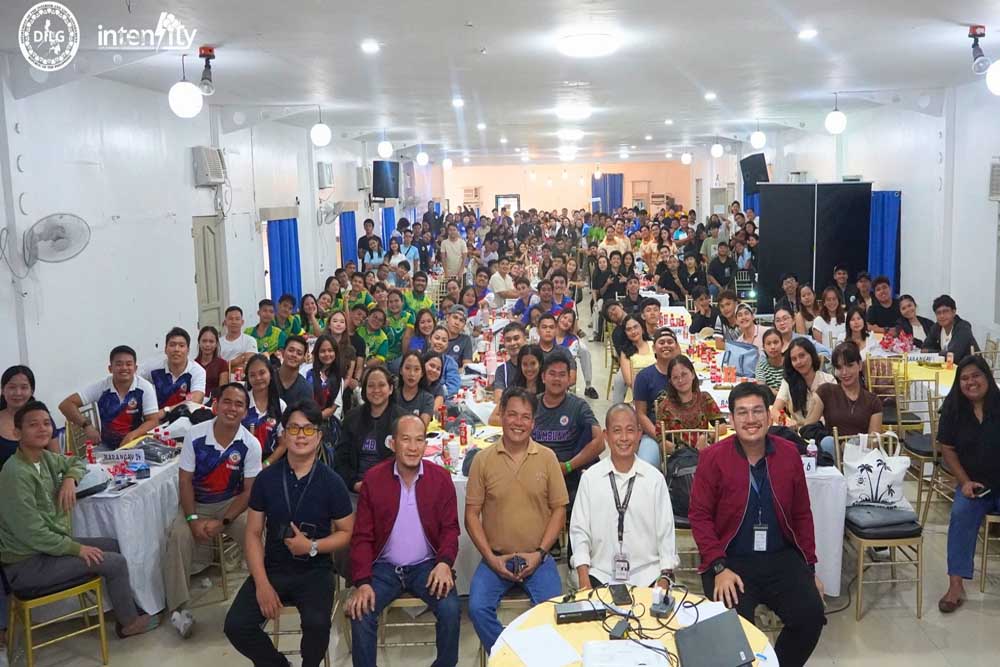
Bruce A. Colao, Regional Director of the Department of Interior and Local Government 10 (front, second from right) poses with resource persons and participants to the Sangguniang Kabataan Assessment and Retooling Activity, April 4, 2025. [DILG Cagayan de Oro photo]
MindanaoToday.com | DILG instructs SK on accountability
By: Uriel Quilinguing
CAGAYAN DE ORO CITY, Philippines – Public officials must, at all times, be accountable to the people and, as such, they have to anchor their decisions and actions in the pursuit of public welfare.
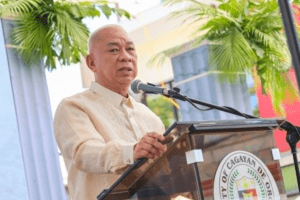
This was the crux of a message that the Department of Interior and Local Government (DILG) Northern Mindanao office posted online on Thursday, April 10, and was attributed to Regional Director Bruce A. Colao.
Colao shared his insights to 279 Sangguniang Kabataan (SK) officials from 40 barangays from this city before a two-day assessment and retooling event at a beach resort in Misamis Oriental ended.
“As a public official, you must at all times be accountable to the people. Now that you are equipped with the necessary knowledge, you must realize that you are a cut above the rest,”
the DILG-10 head said.
Under Republic Act No. 10742 (SK Reform Act of 2015), SK officials have financial independence in their operations, disbursements, and encashment of funds, generated out of 10% allocation for youth development from the Barangay General Fund.
SK funds are deposited in a government-owned bank in the name of the Sangguniang Kabataan of the barangay, with the SK chairperson and SK treasurer as official signatories.
However, SK officials must strictly adhere to auditing and accounting regulations, always mindful of the so-called three-fold liability rule, according to City Director Edward G. Bhagwani in his opening message.
This, Bhagwani said, is the reason for the need to capacitate the SK officials thereby enhancing their competencies in fiscal management, police implementation, and the fundamentals of good governance.
The three-fold liability rule means public officials may face criminal, civil, and administrative liabilities for wrongful actions or omissions, with each type of liability independent. One may be found guilty of one, two or all of the three liabilities.
Upon conviction, criminal liability entails fine and/or imprisonment; civil liability may involve potential compensation for damages or injuries caused by the official’s action; and administrative liability may result to suspension or removal from office from government administrative bodies such as the Civil Service Commission.
For instance, a public official who misappropriate government funds could face criminal charges, be sued for civil damages by the government to recover the funds, and be administratively sanctioned by his or her employer.
Spearheaded by DILG Cagayan de Oro, the assessment and retooling activity got the support from the SK Federation of Cagayan de Oro, the Oro Youth Development Office, City Health Office of Cagayan de Oro, and the Philippine Drug Enforcement Agency 10.
The initiative was intended to reinforce compliance to the guidelines for monitoring the implementation of the Comprehensive Barangay Youth Development Plan (CBYDP) and the Annual Barangay Youth Investment Program (ABYIP). [Uriel Quilinguing/MT]
###