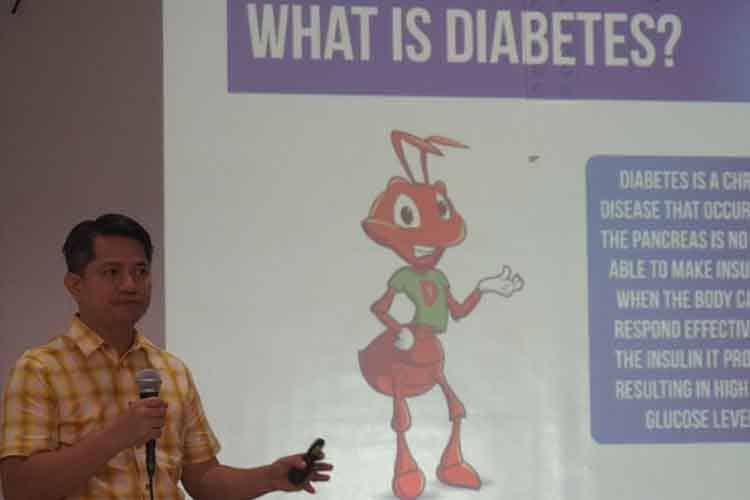
Dr. Sarael S. Brobo Jr., an endocrinologist at the Northern Mindanao Medical Center in Cagayan de Oro City. PIA-10 photo
TheMonitorMindanao.com | Diabetics still spend even with ZBB policy
By Uriel Quilinguing
CAGAYAN DE ORO CITY, Philippines – Even though Zero Balance Billing (ZBB) policy has been in effect in state-run hospitals over a decade ago, yet there have been instances diabetic patients incur out-of-pocket expenses for medicines.
Medical doctor Sarael S. Brobo Jr., an endocrinologist at the Northern Mindanao Medical Center, (NMMC) disclosed this in a press briefing at the Department of Health Regional Office 10 on World Diabetes Day, November 14, 2025.
Brobo said they can dispense insulin and metformin to diabetic patients but there are other medicines, clinically proven to be effective in the management of diabetes, that must be sourced outside.
Under Republic Act No. 12009, the Department of Health (DOH) which oversee the operations of 83 hospitals nationwide, including the NMMC, can only purchase drugs and medicines that are listed in the Philippine National Formulary (PNF).
Also, the ZBB policy – also known as No Balance Billing (NBB)– in DOH-supervised hospitals applies only to indigent patients in basic ward-type accommodation and need not spend for essential inpatient services, medicines, laboratory tests, and professional fees — as long as these are within the case rates of the Philippine Health Insurance Corporation (PhilHealth).
PhilHealth’s case rate for severe diabetes mellitus is P15,800, the most common type of diabetes or Type 2, and the amount is disaggregated as P11,060 for the health care institution (hospital) and P4,740 for professional fee (attending physician).
Type 1 diabetes patients are those whose body produces little to no insulin and requires lifelong insulin therapy, Type 2 diabetic persons are those with elevated blood sugar level, and gestational diabetes are women whose blood sugar levels increases during pregnancy.
Brobo said that the level of blood sugar concentration is normal if it ranges from 70 to 99 milligrams per deciliter (mg/dL), pre-diabetic if it is from 100 to 125 mg/dL, and diabetic if it is within 126 mg/dL and above.
UNLISTED MEDICINES
He enumerated six other medicines which he and other endocrinologists prescribe, depending on the type of diabetes and other underlying health condition of the patient.
The six medicines for diabetic patients are sulfonylurea glinides, pioglitazone, acarbose, SGLT2 (sodium-glucose co-transporter) inhibitors, and GLP-1 RA (glucagon-lioke peptide-1 receptor agonists) gliptin – the latest in the market. These, however, are not in the PNDF list of essential medicines, yet may be prescribed by diabetes doctors.
SGLT2 inhibitors enable excess blood sugar to be removed through urine while GLP-1 RA gliptin promotes feeling of fulness and reduces appetite, according to the NMMC endocrinologist.
PhilHealth Circular No. 2025-0013, the Guaranteed and Accessible Medications for Outpatient Treatment, being referred to as PhilHealth GAMOT, included in its list of 242 medicines insulin and metformin as well as anti-diabetic medications dapagliflozin – an SGLT2 inhibitor– and gliclazide.
TOP CAUSE OF DEATH
Diabetes is an endocrine disorder — a group of diseases that affect the endocrine system’s ability to regulate blood sugar. This occurs when the pancreas, a key endocrine gland does not produce enough insulin, or the body cannot use the insulin properly, resulting in elevated blood sugar levels.
Over time, diabetes can lead to serious damage to the heart, kidneys, eyes, nerves, and blood vessels, hence the need for regular screening, much more if one experiences frequent urination, excessive thirst or hunger, unexplained weight loss, fatigue, blurred vision, and slow-healing wounds. Some may not have symptoms, at all.
At the NMMC, close to 40 percent of patients are diabetic although it may not be the reason of their admissions, including those categorized as such based on results from fasting blood sugar (FBS) tests. NMMC has over a thousand patients every day and about 80 percent are inpatients.
Nationwide, there are about five million Filipinos who have been diagnosed with diabetes, according to the DOH. In 2024, the Philippine Statistics Authority (PSA) reported that there were 24,469 who died of diabetes — the fifth cause deaths that year. Top four were ischemic heart disease, neoplasms (cancer), cerebrovascular diseases (stroke), and pneumonia.
Brobo said that while most patients with diabetes are middle-age and elderly, there have been patients as young as from 14 to 18 years old in recent years, attributing this shift to younger age-group to lifestyle — food choices, physical inactivity, and uncontrolled weight. Diabetes is preventable and once it is there, it can be still be managed, he concluded. (Uriel Quilinguing)