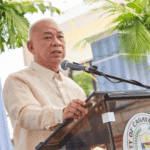
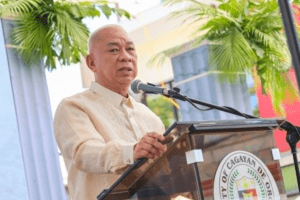
Dr. Gerry J. Cańo, national president of the Professional Criminologist Association of the Philippines (PCAP), welcomes the participants to a three-day strategic planning workshop at the Grand Westside Hotel, Parańaque City, November 5, 2025. Photo by PCAP Secretariat
TheMonitorMindanaoToday.com | Criminology 3rd-most among 47 professions
By: Uriel Quilinguing
CAGAYAN DE ORO CITY, Philippines – While licensed professional teachers (LPT) and registered nurses (RN) share about 58 percent of the 5.5-million professionals in the Philippines last year, yet the roster of over 300,000 registered criminologists (RCrim) has become the third-most among 47 regulated professions.
Lawyer Ramil Gabao, chairman of the Professional Regulatory Board of Criminology (PRB-CRM), disclosed these statistics in a radio broadcast interview to drumbeat the 2nd Philippine Criminology Profession Week (PCPW) celebration on November 3-9.
Gabao said an upward trend in the number of enrollees has been observed in over 600 higher education institutions (HEI) nationwide offering Bachelor of Science in Criminology (BS Crim) course.
Among these HEIs, the School of Criminology and Criminal Justice (SCCJ) of PHINMA Cagayan de Oro College, with over 7,000 total enrollees, is the biggest in Northern Mindanao, if not the entire Mindanao, he said.
He recalled that in the August 2025 Criminologists Licensure Examination (CLE), PHINMA COC produced 200 new criminologists who took the CLE for the first time.
He said it is inspiring to know that many young citizens wish to serve this country by taking criminology course, aside from the fact that once one becomes a police officer or get employed in government agencies, the poverty cycle stops — similar to thousands of teachers and nurses from poor families.
Gerry Cańo, national president of the Professional Criminologist Association of the Philippines (PCAP) and dean of PHINMA-COC’s SCCJ, said that of the over 300,000 professional criminologists are mostly in agencies of government: 50% of the Philippine National Police (PNP), 35% of the Philippine Coast Guard, 30% of the Bureau of Jail Management and Penology, and 15% of the Bureau of Fire Protection.
Cańo said one cannot underestimate the criminology profession’s impact on national security, public safety, peace and development, and nation-building – the very reason for the passage of the Philippine Criminology Act of 2018 (Republic Act No. 11131). It regulates the practice of criminology by establishing the Professional Regulatory Board for Criminologists.
On November 7, 2023, the Office of the President issued Proclamation No. 397, declaring the period from November 3 to 9 of every year as the Philippine Criminology Profession Week. It directed all government agencies and instrumentalities to actively participate and render support to the celebration.
This year’s PCPW activities include a three-day strategic planning — Steering the Philippine Criminology Profession into the Future, a webinar on cybercrime investigation – Criminologists in Cyberspace: Investigating Crimes Beyond Borders, and campus initiatives such as academic summative competition, blood-letting and donation, speech-writing and extemporaneous speech contests, clean-up drives, self-defense and sports tournaments. [Uriel Quilinguing]
###